HVAC text message marketing works best when it feels like good service, not ads. Most of your best texts go to people who already called you, booked you or paid you. They help you answer faster, follow up on quotes, remind people about visits and ask for reviews.
This guide covers the four texts most HVAC companies should send first. It starts with the part many shops skip: getting written consent and giving people an easy way to opt out. Then it shows you how to set up texting so your team can keep up.
You will also get short sample texts you can adjust to your own voice. Keep them simple, send them at the right time, and let a real person take over when a customer replies.
What HVAC text message marketing is and is not
Text message marketing for an HVAC company is not blasting coupons to a bought list. It is short, useful messages to people who asked to hear from you. Think of it as the text version of a good office manager.
Some texts are about a job the customer already asked for. A reply to a missed call or a reminder about tomorrow’s visit fits here. Other texts are marketing, like a fall tune-up offer to past customers. Keep the two types clear in your head, because they need different levels of permission.
Texting also works well next to email. Email is good for longer content, like a seasonal checklist or a plan renewal. If you send both, plan them together. Our guide to HVAC email marketing shows how to keep the two from repeating.
Step 1: Get written consent and make opting out easy
Consent comes first. Without it, the rest of this guide does not matter. The good news is that the right way is also the simple way.
The FCC’s consumer guide on unwanted robocalls and texts says commercial texts require written consent. For informational texts, it says consent is still needed but may be oral. It also says people may opt out of any robotext at any time and in any reasonable manner. Texting rules can be detailed, so check your setup with an attorney before you send marketing texts.
The wireless industry group CTIA publishes messaging principles and best practices that many texting providers follow. It suggests standard STOP wording for opt-out instructions. It also says senders should honor plain requests like stop, end, cancel or quit.
Here is a simple consent routine for an HVAC shop:
- Ask in writing. Add an unchecked box to your website forms and booking pages. Say who will text, what kind of texts they will get and how to stop them.
- Ask at the job. Have the technician confirm the mobile number on the tablet and tap a consent box with the customer.
- Keep a record. Save the date, the source and the wording the customer agreed to.
- Confirm the opt-in. Send a first text that says who you are and how to stop, for example “Reply STOP to opt out.”
- Honor every opt-out. If someone replies STOP or asks in plain words, remove them. Do not text them marketing again.
Never buy a phone list, and never add a number to marketing texts just because it is on an invoice. Treat a number given for a repair as a number for that repair, not for promotions.
Step 2: Set up your texting the right way
Good texting is mostly setup. Get these pieces right once and your texts run without daily effort from you.
- Use a business number, not personal phones. Texts should come from the same number customers call, so they know it is you.
- Use one shared inbox. The office and the owner should see every thread. A reply on a technician’s personal phone gets lost.
- Connect texting to your customer list. Texting that runs from your CRM can send reminders and follow-ups on its own. Our guide to choosing an HVAC CRM covers what to look for.
- Set quiet hours. Send marketing texts during normal daytime hours, such as 8 a.m. to 8 p.m. in the customer’s time zone.
- Plan the handoff. Automation starts the conversation. A person should answer real questions, quote prices and book the visit.
Want help with follow-up? Our AI automation service texts new HVAC customers within seconds. It also covers calls after hours.
Text 1: Missed-call text back
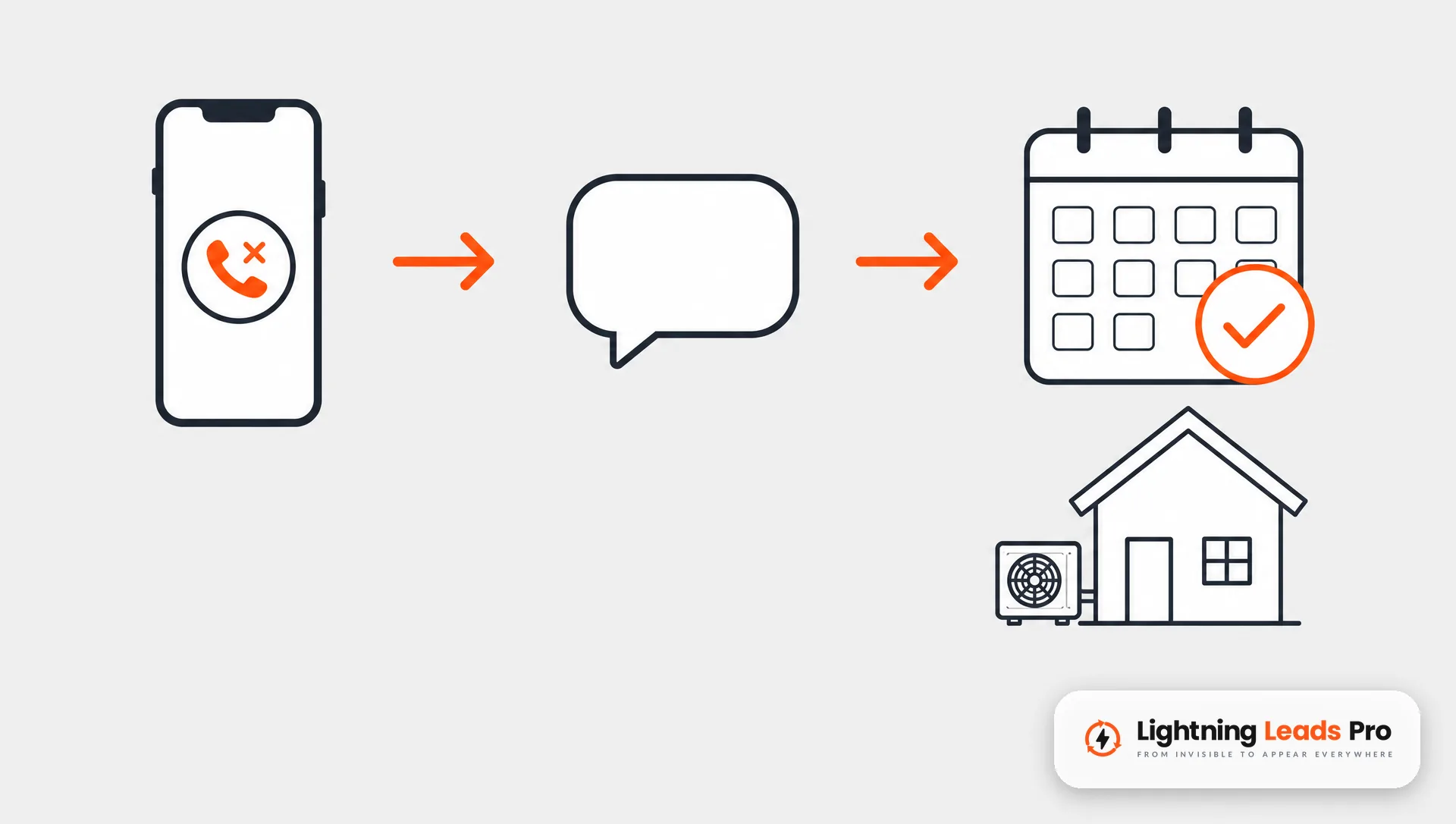
Every HVAC owner misses calls. You are on a roof, under a house or driving between jobs. Missed-call text back sends an automatic text when a call goes unanswered, so the caller hears from you right away.
This text is not a promotion. The customer just called you. Keep it short and about their request, and point them to a real person. Speed matters here, and our post on lead response time explains why the first reply counts so much.
Example (change the names to yours):
“Hi, this is Mike with ABC Heating and Air. Sorry we missed your call. Is this about heating, cooling or something else? Reply here and we will call you back shortly.”
A few tips make this text work better:
- Send it from the number the customer dialed.
- Ask one simple question, so the reply tells your office what the job is.
- Route no-heat and no-cool replies to the person on call.
- Call back. The text buys you a few minutes, not a few hours.
Text 2: Quote follow-ups
Many HVAC quotes go quiet after the visit. The homeowner wants to think, talk to a spouse or compare prices. A short follow-up text keeps your quote alive without a pushy phone call.
The customer asked you for this quote, so a follow-up about it is part of the job. Keep it to two or three texts over about a week. Stop as soon as they reply, book or say no.
Example timing:
- Same day: Thank them and confirm the quote arrived.
- Two or three days later: Offer to answer questions or walk through the options.
- About a week later: Ask if they want to move forward or need more time.
Example (change the names to yours):
“Hi Maria, it’s Mike with ABC Heating and Air. Just checking that the furnace quote came through. Happy to answer any questions. Reply here or call this number anytime.”
Do not add urgency you cannot back up, like a fake deadline. If you do have a real offer, say so plainly and give the real end date.
Text 3: Appointment and maintenance reminders
Reminders are the easiest texts to start with. Customers expect them, and they cut down on wasted trips. They also bring back people who forgot about their yearly tune-up.
Appointment reminders
Send one text the day before and one when the technician heads out. Include the day, the time window and a way to reschedule. Keep the text short so it reads well on a lock screen.
“Hi Maria, this is a reminder of your ABC Heating and Air visit tomorrow between 8 and 10 a.m. Reply 1 to confirm or 2 to reschedule.”
Maintenance reminders
Maintenance reminders bring past customers back each season. Send heating tune-up reminders in the fall and cooling reminders in the spring. For plan customers, remind them their visit is due. Give them an easy way to book.
A tune-up reminder to a customer who is not on a plan is closer to marketing. Send it only to people who agreed to receive marketing texts. If you are unsure which group a contact is in, leave them out.
Text 4: Review requests
Right after a good visit is a natural time to ask for a review. A text makes it easy, because the customer can tap a link and leave one in a minute.
Google’s help page on getting more reviews says customers can use a Google link or a QR code. The same page says offering discounts or free items for reviews is not allowed. Google’s contributed content policy also says businesses may not selectively solicit positive reviews.
So send the same review text to every customer after every finished job. Do not screen for happy customers first, and do not offer anything in return.
Example (change the names to yours):
“Thanks for choosing ABC Heating and Air today, Maria. If you have a minute, we would love an honest review of your visit. Here is the link to our Google profile.”
Then read and answer the reviews that come in, both good and bad. Want help? Our reputation management service helps with review requests. It also drafts replies for you to approve.
Simple rules for every HVAC text
These rules of thumb apply to text message marketing for small business in any trade. They matter even more for HVAC, where many texts land during a stressful repair.
- Say who you are in every first text. Use your business name, not just a first name.
- Keep it short. One idea per text. If it needs a long explanation, call or send an email.
- Send less than you think. A few useful texts a month beat a weekly sales blast.
- Make every link clear. Use your own website or Google profile link, not a mystery short link.
- Write like a person. Plain words, no shouting in capital letters, no stacks of emojis.
- Track the results. Count replies, booked jobs and opt-outs. A rise in opt-outs means you are sending too often or sending the wrong thing.
Texting works when customers see your texts as help. If a text would annoy you as a homeowner, do not send it.
Frequently asked questions
Can I text customers without their permission?
Do not send marketing texts without written consent. The FCC consumer guide says commercial texts require written consent. Informational texts still need consent, which may be oral, so ask your attorney to review your setup before you start.
What is missed-call text back?
It is an automatic text that goes out when a call to your business is not answered. It lets the caller know you saw the call and asks what they need. A person on your team should follow up quickly.
How often should an HVAC company text customers?
Job-related texts go out when the job needs them, like reminders and quote follow-ups. Keep marketing texts to a few useful messages a month at most. Watch your opt-outs and slow down if they climb.
What should an HVAC marketing text say?
Say who you are, give one clear reason for the text and show one next step. Add opt-out instructions, such as “Reply STOP to opt out,” where they apply. Keep it to two or three short sentences.
Is text message marketing worth it for a small HVAC company?
For most shops, the job-related texts are the place to start. Missed-call text back, quote follow-ups, reminders and review requests help with customers you already have. Add marketing texts later, once your consent routine is solid.
Put your HVAC texts to work
Start with one text, not five. For most HVAC companies, missed-call text back is a good first text, followed by appointment reminders. Add quote follow-ups and review requests once the first two run smoothly.
Want a second set of eyes on how your company handles calls, follow-ups and reviews? Book a Free Local Lead Growth Session. We will walk through where calls slip through today and which texts would help first.